
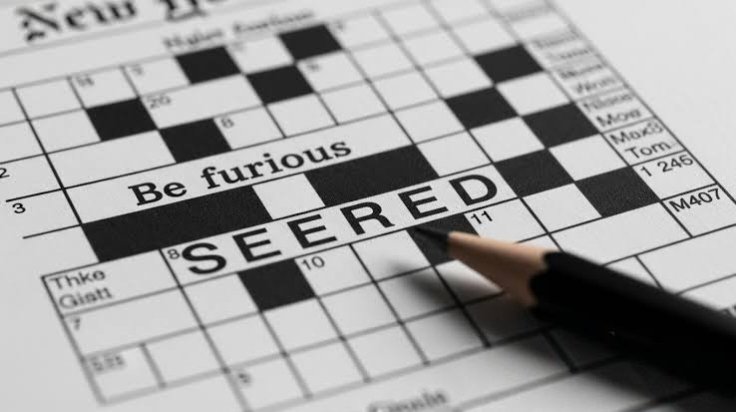
The phrase be furious nyt crossword has become a surprisingly common search term among crossword enthusiasts, language lovers, and casual puzzle solvers alike. At first glance, it seems simple—after all, being furious just means being angry, right? But when this phrase appears in a New York Times crossword puzzle, it often carries more nuance than expected. Understanding why this clue is tricky requires a closer look at crossword conventions, wordplay, linguistic flexibility, and the unique editorial style of the NYT crossword.
In this in-depth article, we’ll explore what be furious nyt crossword really means, why it shows up in puzzles so often, how solvers can decode it more easily, and what it teaches us about language and logic. Whether you’re a beginner or a seasoned solver, this guide will help you approach similar clues with more confidence and insight.
Understanding the Phrase “Be Furious” in NYT Crossword Puzzles
When encountering be furious nyt crossword as a clue, many solvers instinctively think of obvious synonyms like rage or seethe. Sometimes those answers fit perfectly. Other times, they don’t—leading to frustration that mirrors the clue itself.
In crossword language, “be furious” is typically a verb phrase, not an adjective. That distinction matters. Instead of describing a state of anger, the puzzle may be asking for an action that represents anger. This opens the door to multiple interpretations, depending on tense, grid length, and crossing letters.
For example, “be furious” could imply:
- To rant
- To storm
- To fume
- To explode
- To rail
The challenge lies in recognizing that crossword clues are rarely literal. The NYT crossword, in particular, favors precision, economy of language, and clever misdirection.
Why “Be Furious NYT Crossword” Is Such a Popular Search Query
The rise in searches for be furious nyt crossword isn’t accidental. Several factors contribute to its popularity:
- The NYT crossword’s massive audience
Millions of people solve these puzzles daily, meaning even a single confusing clue can generate widespread curiosity. - Ambiguity of emotional language
Emotions like anger have dozens of synonyms, making it harder to pinpoint the “correct” answer without context. - Increased online solving
Digital solvers often pause mid-puzzle to search for clue explanations, especially when stuck. - Repetition across different puzzles
The clue may reappear in various forms over the years, each time with a different answer.
As a result, solvers frequently turn to search engines to decode what the clue is really asking for.
Be Furious NYT Crossword Clue Structure and Editorial Intent
To truly understand be furious nyt crossword, it helps to examine how NYT crossword clues are constructed.
Verb-Based Clue Logic
NYT crossword editors are meticulous about grammar. If the clue says “be furious,” the answer must grammatically match that phrasing. That means:
- The answer is usually a verb
- It often appears in base form (e.g., rage, not raged)
- The tense must align with the clue exactly
This grammatical precision is why some seemingly correct answers fail—they may express anger, but not in the proper grammatical form.
Crossword Economy and Grid Constraints
Another reason the clue can be tricky is grid length. The number of letters available limits which synonyms are even possible. For example:
- A 4-letter slot might suggest fume
- A 5-letter slot could indicate seethe
- A 6-letter slot might allow rant on
Understanding this constraint helps narrow options quickly.
Common Answers Associated With Be Furious NYT Crossword
Although the exact answer varies from puzzle to puzzle, some solutions appear more frequently than others when dealing with be furious nyt crossword.

Frequently Used Answers
- RAGE – One of the most direct and commonly accepted answers
- FUME – Suggests contained anger rather than explosive rage
- SEETHE – Implies slow-burning fury
- STORM – Often used metaphorically in crosswords
- RAIL – Indicates vocal anger or protest
Each of these fits specific puzzle contexts and grid requirements, which is why no single answer works every time.
How Context Changes the Meaning of Be Furious NYT Crossword
One of the most overlooked aspects of crossword solving is context. In the NYT crossword, context is everything.
The Role of Cross Letters
Crossing answers can completely change how you interpret be furious nyt crossword. A single confirmed letter might eliminate half your guesses instantly.
For example:
- If the second letter is U, fume suddenly becomes more likely
- If the final letter is E, seethe jumps to the top of the list
This is why experienced solvers often skip tough clues and return after filling in surrounding answers.
Puzzle Difficulty Matters
The meaning of the clue can also shift depending on the day of the week:
- Monday–Tuesday puzzles tend to be straightforward
- Wednesday–Thursday puzzles introduce light wordplay
- Friday–Saturday puzzles often use indirect or abstract interpretations
So the same clue might have a simple answer early in the week and a more creative one later on.
Linguistic Nuances Behind Be Furious NYT Crossword
Language flexibility is a big reason why be furious nyt crossword can trip people up. English allows emotions to be expressed in many ways—verbally, physically, metaphorically—and crossword puzzles take full advantage of that.
Emotional Verbs vs Emotional States
Crosswords often favor verbs of action over adjectives of description. Instead of “angry,” you’ll see answers that imply behavior:
- Shouting
- Complaining
- Brooding
- Venting
Recognizing this pattern helps solvers shift their thinking from what anger is to what anger does.
Why NYT Crossword Loves Emotion-Based Clues
Emotion-based clues like be furious nyt crossword are popular with NYT editors for good reason.
They Are Universally Relatable
Everyone understands anger. This makes the clue accessible to a broad audience while still allowing for clever twists.
They Offer Rich Synonym Pools
Few concepts have as many expressive options as emotions. This gives constructors flexibility when building grids.
They Encourage Lateral Thinking
Rather than relying on trivia, these clues test a solver’s understanding of language and nuance.
Tips to Solve Be Furious NYT Crossword Clues Faster
If you want to crack be furious nyt crossword clues with less frustration, here are some proven strategies.
Think Grammatically First
Ask yourself:
- Is the clue asking for a verb?
- Is it present tense?
- Is it active or passive?
Answering these questions immediately narrows your choices.
Use Crossings Strategically
Fill easier clues first, then return to emotional or abstract ones. Cross letters are your best allies.
Avoid Overthinking Early-Week Puzzles
If the puzzle is early in the week, the answer is likely simple and literal.
Keep a Mental List of Synonyms
The more puzzles you solve, the more familiar you’ll become with common crossword answers related to anger and emotion.
The Educational Value of Be Furious NYT Crossword Clues
Beyond entertainment, clues like be furious nyt crossword actually sharpen language skills.
They encourage:
- Vocabulary expansion
- Grammatical awareness
- Contextual reasoning
- Pattern recognition
Over time, solvers develop a deeper appreciation for how flexible and expressive language can be.
More From Info:https://jernsenger.co.uk/axelanote/
Be Furious NYT Crossword and the Evolution of Puzzle Solving
As crossword puzzles move increasingly online, solvers are engaging with clues differently. Search queries like be furious nyt crossword reflect a shift toward collaborative and research-assisted solving.
Rather than diminishing the challenge, this trend:
- Helps new solvers learn faster
- Builds puzzle-solving communities
- Keeps interest in crosswords alive
The NYT crossword continues to thrive precisely because it adapts to these changes while maintaining high editorial standards.
Strong Conclusion: Why Be Furious NYT Crossword Matters More Than You Think
At first glance, be furious nyt crossword might seem like just another tricky clue. But in reality, it represents everything that makes crossword puzzles engaging: linguistic depth, clever misdirection, and the joy of discovery. This simple phrase challenges solvers to think beyond surface meanings and embrace the full richness of language.
By understanding how the NYT crossword uses grammar, context, and editorial nuance, solvers can approach even the most frustrating clues with confidence. The next time you encounter this phrase in a puzzle, you won’t just guess—you’ll understand.
Frequently Asked Questions (FAQs)
1. What does “be furious” usually mean in the NYT crossword?
In most cases, it refers to a verb expressing anger, such as rage, fume, or seethe, rather than a descriptive adjective.
2. Why does the same be furious nyt crossword clue have different answers?
Because answers depend on grid length, crossing letters, and puzzle difficulty, the same clue can legitimately lead to different solutions.
3. Is be furious nyt crossword more common on certain days?
Yes. Emotion-based clues appear throughout the week, but later-week puzzles often use more abstract or indirect answers.
4. How can beginners solve be furious nyt crossword clues more easily?
Focus on grammar, fill in easier crossings first, and remember that NYT clues are usually fair—even when they’re tricky.
5. Does looking up crossword clues ruin the puzzle experience?
Not at all. Many solvers use searches to learn patterns and improve, making future puzzles more enjoyable and rewarding.